Showing posts with label Volunteering. Show all posts

Tuesday, 23 September 2014

Good Times!

Quite a lot has happened since my last update, as the one that I did in between didn't actually post online... Never mind. I have now finished my job up in Perthshire and am back down south once more! I absolutely loved the job in Perth though, I got to see some amazing places and monitored some beautiful birds! In the latter half of the job I was mainly focused on wader surveys, counting the number of breeding pairs of Oystercatcher, Lapwing, Curlew, Redshank and Snipe across several different locations to see how the breeding populations have changed inTayside since 1992. The outcomes of this were pretty much what we expected with decreases seen in the number of Lapwing and Redshank, although Curlews actually increased in some areas which was unexpected as they are known to be decreasing on a national scale. The number of Oystercatchers increased in many areas, whilst Snipe were up and down across the sites as they are known to be difficult to survey with any accuracy. But overall, a pretty good season for these birds, with chicks and fledged young seen across several of these sites!

However, I think one of the big highlights of this role was surveying breeding raptors. This is something that I had done before in small doses but never quite to this scale, covering large areas of land and monitoring the nests of any raptor species that I came across. It seems to have been a fairly good season for most raptors too, with many of the nests that I was following fledging chicks. I really enjoyed all of the raptor work that I did but I think my favourite was monitoring a pair of nesting Merlin on one of my sites. They proved to be quite elusive at times but I did eventually find the nest with 3 healthly young chicks, all of which fledged successfully! I was also able to help with ringing three Peregrine chicks in a nest that I was monitoring, applying little radio tags so that they could be followed throughout their lifetime - an amazing experience!

Merlin chicks!
Peregrine chicks being ringed
As well as all of this, I also had the chance to visit another RSPB reserve up in the far north of Scotland this year to help out with the monitoring of the seabirds that breed on the beautiful Priest Island. The island is host to a variety of habitats, from heathland to bogs, and rocky caves to boulder beaches and scree, but there is one seabird that can nest in any of these conditions - the Storm Petrel. It is a tiny black and white bird, about the size of a sparrow but it spends it's entire life out at sea, only coming ashore to nest. These tiny birds nest in burrows and will make a burrow anywhere they can - in crevices between rocks, in cracks in the underlying peat, and even in old rabbit burrows. As they are so small they are very vulnerable to predation and can only nest in areas where there are no ground predators such as rats, although predation from other birds is still a possibility so they only come out of the burrows at night, with the adults switching over incubation duties every few days. Priest Island is a haven for these birds as it has no ground predators and is host to one of the largest Storm Petrel colonies in Britain - making it an incredibly important place for nature conservation. It is a SSSI and an SPA, giving it legal protection and it is managed by the RSPB who visit the island every year to survey these birds as part of an on-going study into their survival and breeding success. In addition to this, once every five years the RSPB surveys the breeding population of the Storm Petrels across the island to see how they are doing.

Priest Island
View across Priest island
I went along to help out with this five-yearly survey. This involved camping out on the island in the only spot where there are none of these birds nesting and going out each day to survey a different area of the island. We didn't do any surveys at night as we didn't want to disturb these birds or prevent them from re-entering their burrows. The survey itself involved playing a tape of Storm Petrel calls and counting how many birds sing back to the tape, announcing their territory. However not all birds will respond all the time, so we had to use study plots to calibrate these results. At no point did we try to catch the birds or find the burrow entrances as we wanted to cause the least amount of disturbance possible whilst surveying them. This is all part of a long-running study with very experienced staff and I'm very happy that I got to be a part of it! I'm not sure of the final numbers but I'm hoping that the population of Storm Petrels on this island is remaining stable or increasing, despite some issues with habitat destruction caused by visitors to the island knocking down walls where these birds breed, or disturbing the birds in the breeding season. However, a recent paper on the subject shows that they may be declining at this site - you can read the abstract of this paper here.

Another big plus of my job this year was that it was based near the city of Perth, providing me with easy access to supermarkets, shops, restaurants, cafes, pubs, clubs, a cinema and much much more! So I was able to have a bit more of a social life which was very enjoyable! I even went rock climbing a few times with people from the office (even though I'm a bit rubbish!), as well as meeting up with them for drinks and clubbing, hill walking, and I even managed to get to yoga a few times. Pretty good going really! We also took a team trip to the Isle of May to visit the lovely seabird colony there, climbed Ben Vrackie as the leaving do for the summer staff (i.e. me!) and I helped out the Orkney Seabird Heritage Project by making a paper mache Arctic Tern!

Rock climbing in Dundee
Beautiful sunny day on the Isle of May!
The seabird colony on the Isle of May
The team at the top of Ben Vrackie! Not my photo but I thought it was too great not to use it! Hopefully I will be forgiven.
Alex the Arctic Tern, now all the way up in Orkney for the Heritage Project, which will be coming to Edinburgh at some point I think. Check the website for more info.
So what now, you ask? Well at the moment, not a lot. I'm back home, looking for jobs and hoping something good comes my way and taking the opportunity to relax a bit whilst I sort stuff out for going to Mauritius. Yes, that's right, MAURITIUS! I've been accepted to volunteer with the Mauritian Wildlife Foundation (MWF) for six months starting in January, where I'll be helping out with the seabird project - you can find out more information about this project here. It sounds like it's going to be an amazing experience, and everyone that I've spoken to that's volunteered with MWF previously has really enjoyed it and highly recommends it! So I've put in my application for a visa/work permit and am now just waiting to hear if it's been accepted before I can book flights and insurance and sort out everything else. It's not paid, but I'm really looking forward to it and all the more reason to find a job in the meantime! Watch this space!!
I had a great time on holiday in Mauritius a few years ago and I'm really looking forward to going back!

Sunday, 23 March 2014

Yorkshire Photo Blog

So I've decided to do something a bit different today - as I am now back home in Hertfordshire and have decent internet access - a photo blog! And here it is, a description of what I've been up to in Yorkshire over the winter, told through the use of my own lovely photographs!
When I first arrived, there was little water on the lagoons, creating great conditions for wading birds such as Ruff, Curlew Sandpiper and Redshank to feed on the small invertebrates living in the mud
Stray/injured/lost birds are often brought into the RSPB, and this young Gannet, named 'Captain Beaky', was no exception. He came down in strong winds and was too weak to fly off, and was brought to us. So we cared for and fed him until he was strong enough to be released at the seaside.
A view of one of the pools maintained for breeding Bitterns to fish in. We spent a great deal of time creating 'Blue zone', an edge habitat between the pool and the reedbed where insects congregate and provide food sources for reedbed birds and fish.
Cleaning out and repairing the 70+ nest boxes that are maintained over winter each year for the large population of Tree Sparrows to nest in come spring. Tree Sparrows are similar to the more common House Sparrow, but don't like human company as much and tend to nest away from people.
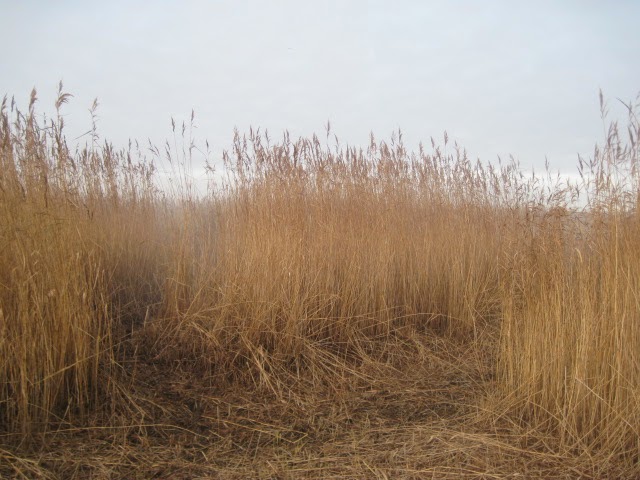
Typical view out in the reedbed when cutting the plots of reed. We cut over 5 hectares (5 football pitches) of reed over the winter to create a mosaic of different habitats across the reedbed, creating better conditions and more insects for Bearded Tits to feed and breed. After a week or so of cutting, it became a bit of a maze out in the reeds, and I managed to get lost more than once!
Out in the reedbed, following behind the Softrak as it does it's thing, cutting paths and plots in the reedbed, creating a lovely mosaic of habitats to keep the reedbed in tip top condtion.

Putting up some new lines of fencing out in the reedbed to replace some old fencing and control where the ponies can get to, ensuring that no part of the reedbed gets too munched by them! This was a long, difficult job, but actually one of my favourites!

And here they are! The beautiful boys themselves, doing a great job of munching the reed on the edges of the lagoons, creating edge habitat which is good for all the birds, mammals and beasties that live in the reeds.
The massive tidal surge on 5th December resulted in a rather muddy, sticky reserve, with rubbish, reed litter, and mud covering everything. The clean-up operation took about 3 weeks, but we managed to re-open after Christmas.
The paths and hides (see next photo) got totally covered in mud and silt, which we had to scrape off with massive snow scrapers, shovels, and stiff yard brushes. We scraped off a layer of stone and spent some time drying out and scrubbing hide floors, but we got it to a decent condition in the end!

The good thing about the tidal surge though, is that it brought a lot of water onto the reserve, filling up the lagoons and re-wetting the reedbed and the grazing marsh, helping to create good conditions for the breeding season and attracting in a lot more ducks and geese!
The mud and silt on the paths also allowed animal tracks to be seen more clearly, including those of weasels, badgers, foxes, deer and birds of all shapes and sizes
You do find some odd things washed up in the reedbed...
Things were back to normal after Christmas, and we spent some time cutting up some of the coppiced wood from last year and stacking it up for use as firewood! The driftwood that was washed up came in handy too!
We also spent some time clearing up the yard and the area around the workshop and office, in preparation for some improvements, which involved removing some trees, bushes and old fencing, and just generally tidying up the space!
As well as spending time at Blacktoft Sands, I also visited the RSPB reserve at Fairburn Ings, where I saw a lovely range of ducks, geese, woodland birds, and even a few Kingfishers! Well worth a visit.
A view of sunset over one of the lakes at Fairburn Ings.
In addition to all of the practical work, I also helped out with people engagement, including writing out information boards to go along the nature trails to the hides! Of course, the picture isn't by me - far too good to be my work!
So here is the result of the new Softrak reed cutter/bundler - giant bales of reed! The plan is to use these reed bales to create little logs of reed which can be burnt on a fire as part of the biofuels project mentioned in my earlier post.

So there you go! A brief round-up of some of the habitat and site management things that I got involved with whilst volunteering up at Blacktoft Sands over the winter. I really enjoyed my time working on this site, especially as it's so different to what I've done previously! But at the end of March I'm heading up north once again, this time to Perth (the one in Scotland, not Australisa!) to survey a wide variety of bird species across Perthshire! I won't be based at a reserve this time, I'll be moving about all over the place, surveying wherever the birds are! I'll have my own flat and I'll be given a car to use to get around, plus I'll be getting paid! Hooray! So wish me luck for the season ahead!

Thursday, 7 November 2013

A Wetland Wonderland


People often ask me what it’s like to work on a nature reserve and live in a remote area ; ‘How do you get shopping?’, ‘What do you do for fun?’, ‘You’re  living so far from civilisation, there’s not even a STARBUCKS near you, how do COPE???’ and ‘Do you really like living alone? I mean, you’re so ALONE, so lonely and alone. All ALONE.’  are just some of the questions I deal with on a regular basis. But really, it’s not as bad as everyone seems to think it is! They see that I’m in the frigid north and assume it’s just me and the polar bears for miles around, living in a bleak, sunless wilderness, suffering through grey days and greyer nights, with no hope of brighter days to come. And yes, it is getting colder, winter is coming, but it’s not so bleak as you might think. The reserve here is lovely, and I really do enjoy being surrounded by countryside! I much prefer rolling green hills, farmland, woodland and lakes to the depressing urban jungle that defines our towns and cities across the land, with their towering buildings, rat-infested parks and  rubbish tips, where the streets are paved with dog poop. I enjoy the quiet relaxation of the countryside, its peacefulness and the friendliness of its residents. And that’s exactly what I get in my current role! Don’t get me wrong, it is nice to spend some time in our towns and cities, meeting up with friends, going out clubbing, shopping, drinking, eating out, and generally being a bit more classy and whatnot, but I’m very glad to get away from it all by working outdoors in these lovely remote places.
The loveliness of rural life
‘So what’s so great about this nature reserve?’ I hear you cry. Well, it’s just a bit different from everywhere else that I’ve worked before really! Whereas the reserves I was working on in Orkney and the Farne Islands are seabird reserves, tall cliffs covered with nesting seabirds and smelling a bit fishy, with some nice vegetated bits and lots of nice birds and wildlife a bit further inland, and Loch Ruthven was a large loch surrounded by woodland and heathland, Blacktoft Sands is basically one big reedbed with lots of pools, big and small, throughout the reeds. It’s set in between two rivers, the Ouse and the Trent, jutting out into the channel where the two rivers meet to form the Humber, surrounded by Scunthorpe, Hull, York, Leeds and Doncaster. My nearest town is Goole, an industrial little place known mostly for it’s part in the ship-building industry, and I regularly spy ships coming up the Ouse, past the reserve, past my house, and on towards Goole. Which is slightly surreal actually, as from street level it looks as if the ships are carving their way through fields… Anyway, the reserve is pretty big, although only a small area is open to the public, as the majority of the reserve is reedbed. Despite that though, there are 7 bird hides, each one looking out onto a different pool, with different birds on each, except Ousefleet hide, which looks out onto the grazing marsh, a drier bit of land that’s grazed in by cattle and used by breeding waders and wintering wildfowl.
Here’s an aerial photo of the reserve, showing the rivers, the pools that the hides look onto, the areas where the reeds have been cut, and the extent of the reedbed.
A typical view from one of the hides
Some lovely trees as well
The reserve is best known for the Marsh Harriers which breed and over-winter in the reedbed. They have been very successful over the past couple of summers, but over winter they get large numbers of these beautiful birds of prey roosting in the reeds overnight, along with a few Hen Harriers too. These birds have come in from the continent and need a nice place to sleep for the night, and where better? They all start arriving as the day turns to dusk, with as many as 30 Harriers seen in the sky at once, then one-by-one they drop into the reedbed to have a little sleepy – a wonderful sight to behold! The roost is only now beginning, with about 8 Marsh Harriers and 2-3 Hen Harriers seen coming in to roost recently, but these numbers will build as winter deepens, with the chance of seeing Owls as well! What could be better?  But during the day, there’s a wide variety of waders, ducks, geese with Bearded Tits, Reed Buntings and TreeSparrows flitting about, and Redwings and Fieldfares passing by overhead. I’ve seen a nice variety of birds since I’ve been here, and I’ve only been here a month!  I think some of the winter birds have been the nicest birds so far – Whooper Swans and Pink-footed Geese and Brent Geese. But the waders have been great too and I’ve learnt to recognise a few species that I couldn’t identify before, which is always great!

In addition to all of this though, we’ve also got four lovely Konik ponies. These are an ancient Polish breed of horse, much better adapted to life in a wetland environment than most other breeds are. They are used in Poland to graze and manage the large areas of reedbeds, as they are happy to wade around in water and are less susceptible to getting foot problems from spending a lot of time in water – a big problem for some breeds. They are hardy little guys, and they love to eat the reeds, so they are helping to manage the habitat here! They eat the reeds back and help to create pathways through the reeds and shorter areas of reeds that many reedbed birds and wildlife like to feed and shelter. The Koniks are here for three years as part of a wider project to find ways to manage the habitat more naturally. Most of the habitat management work that goes on here is done by machinery, such as brushcutters. Plots are cut in the reedbed each year on a rotation so that each area is cut every few years. This helps to provide a mosaic of habitats, with areas of younger shorter reeds for birds like Bitterns to feed in, as well as taller, older stands of reed for birds like the Bearded Tit to nest in. In this way, we can keep the reedbed at its best and provide habitat for all of its residents!
A very nice photo of a very photogenic Konik pony. Unfortunately not one of my photos though!

This photo shows some of the plots where reeds have been cut in previous years, and the ditch that feeds all of the pools.
This reed cutting work will be continued again this year, as this is what me and the team will be doing for a lot of the winter, creating a more varied habitat for the reedbed residents, both the permanent and over-wintering ones. In addition to this we’ll be carrying out a few more habitat management and maintenance tasks to keep the reserve looking its best, so both people and wildlife can enjoy this wetland wonderland!

Thursday, 10 October 2013

A Yorkshire Lass

Unfortunately I wasn't able to find a paid conservation job for the winter, despite applying for several! It’s a very competitive career, especially in the winter as there are far fewer jobs than there are in the summer and almost all of the jobs that come up involve a lot of practical work, which I just don’t have a great deal of experience in! Practical work on reserves is habitat management work, which can be anything from painting hides to building fences to digging ponds, cutting down trees or cutting back heather and gorse. The type of task really depends on the habitat on the reserve, and each reserve is different depending on what species it focuses on, but with all reserves the vast majority of habitat management work takes place on reserves over winter, as there are no birds breeding then. I have gained some experience in practical work by volunteering with the Box Moor Trust and other organisations but the fact is there are just a lot of people out there with more experience than me in this area. I would have loved to have stayed in Orkney over winter, but there just isn't a lot of habitat management work that they need to do up there, and they have the necessary staff to complete the tasks that they do have.

So, what now? If you can’t get a job because you have no experience, how do you get the experience? Well, the answer is volunteering. I managed to save up enough money whilst working in Orkney this year and last year so that I can afford to volunteer for six months. It’s going to be tight, as I don’t have a lot of money, but I should be able to just about do it! So I got in contact with the volunteering department at the RSPB and they set me up with a lovely Residential Volunteer Intern placement at their reserve at Blacktoft Sands in Yorkshire! I moved up at the end of September and will stay in this placement until the end of March or until I find a paid job elsewhere. It’s a pretty good deal really – I get a house where I don’t have to pay rent or bills, I get to experience life in a part of the country that’s new to me, and I get a lot of good practical experience out of the deal, which will really help me to find a permanent job or a job over winter next year! Plus, they are going to train me up a bit! I’m being sent on a brushcutter course later this month, where I’ll learn to safely use a brushcutter (like a strimmer but with big metal blades on the end instead of the plastic string) and I’ll get a certificate to prove it! I’m also being sent on a Child Safety and Welfare course, but that sounds less fun; no machines to play with on that course. So all I really have to pay for while I’m here is food and any trips that I want to take on my days off, a pretty good deal really!

I’ve been here a week now and really enjoying it so far, but they’ve kept me pretty busy with building fences, installing barriers, cutting down trees, chopping firewood, and several inductions. Only one hiccup so far – I accidentally cut down the wrong trees! Luckily, it’s not been too much of an issue, and I have since cut down the correct trees, but still felt pretty silly cutting down the wrong ones! I’ve also been trained up to do some visitor work, which should be good. Lots of membership stuff and showing people the birds – which are mostly waders, ducks and Marsh Harriers here, a bit different to Orkney, so I’m definitely learning some new birds! The staff are all lovely here and I’m also working with (and living with) the short term volunteers, who come and stay at Blacktoft for a week or two and do pretty much all of the same things as me! The house that I’m living in is pretty nice too – it’s a two storey semi-detached house in a little village about a mile from the reserve. Big kitchen/dining room, and the living room even has a TV! The luxury! Now I just need to find a bike that I can fit on (#shortpeopleproblems), and then I can get around the local area and even start cycling to the reserve every day instead of getting a lift – I WILL get fit!

Anyway, I’m really enjoying my time here so far, and really looking forward to finding out what else is in store for me here. I don’t have Wifi here though, so I have to use the office computers to use the internet, which means I won’t be updating this blog as often as I would like, but I’ll try to update at least once a month! And hopefully I won’t make any more big mistakes – next time I’ll make sure I’m definitely cutting down the right trees! Photos to follow in the next blog!

Tuesday, 10 September 2013

End of Season Round-up!

Well, that's it now, the breeding season is over and I'm no longer in Orkney. So how did the season go for our breeding birds? Well, in short, it wasn't great. Due to the cold weather lasting throughout May and well into June, many of the seabirds were late to start nesting, and we saw fewer pairs returning to the cliffs to nest this year; this may be because the adults weren't able to find enough food over winter and were therefore in too poor a condition to breed this year, or it could be due to other circumstances - the large wrecks of seabirds over winter may have had an effect. Whatever the reason, they didn't do so well. However, some others did do fairly well, so here's a quick species-by-species run down. I monitor the seabirds in 7 plots along the cliff face on the North Hill reserve, and the following results relate to those 7 plots.

Only 1 pair of Kittiwakes attempted to nest this year. However, this pair didn't complete their nest and laid no eggs. No fledged young were seen around the cliffs on Papa Westray at all this year, so it is likely that none fledged at all from anywhere along the cliffs. This is a species that has declined massively in the past 10 years or so due to the lack of food availability - they need Sandeels to be close to the water's surface in order to feed, but due to climate change there are fewer Sandeels at the right depth for these birds.
Kittiwakes on nests
Guillemots also did badly this year, with no chicks fledged from the 78 nesting pairs that I monitored. This was mainly due to high levels of predation of Guillemot eggs and chicks by gulls and skuas, although lack of food almost certainly played a part. Fewer birds returned to nest this year, which is always an issue for Guillemots as they adopt a 'safety in numbers approach' - cramming as many nesting birds onto the breeding ledges as possible to reduce the chances of predation. But as Guillemot numbers drop, protection from predators drops, and so the number of fledged chicks drops.
Guillemots with chicks - not a common sight on Orkney this year
Razorbills fared slightly better though, with 5 chicks fledged from 27 pairs - very similar numbers to last year, showing that their choice of nesting spot (within small cracks in the cliff face) is beneficial to prevent predation of young.
Razorbill pair with egg
Shags did well as they always do, and had the highest productivity (number of chicks fledged per pair) of all of the breeding seabirds this year! From 9 nests, 13 chicks fledged! Shags tend to do much better than other species as they eat a wider variety of prey, they can dive quite deep to catch their prey (up to 45m!) and they defend their nests quite viciously so predators ususally go for something a bit easier!
Shag on nest
The Gannets nesting on Noup Cliffs also did quite well this year, with the number of nesting birds increasing to 673, with 464 chicks fledged! Gannets are our largest seabird, and they will eat anything they can find, diving deep if necessary, so they usually do better than our other seabirds!
Gannets nesting on Noup Cliffs
Fulmars are another species that usually do well as they spit horrible smelly fishy oil at any predators that get too close to their nest, but this year and last year they have shown very poor productivity. Only 6 chicks fledged from 137 nests this year - a terrible result. We think this might be due to the Ravens that have moved to the cliffs on North Hill predating the vulnerable chicks whilst the parents are away fishing, but it could be due to poor weather conditions when the chicks are small , or due to the lack of food around Orkney and Shetland. Research has shown that some of the Fulmars nesting in Orkney will go as far as Norway to get food for their chick! A long journey indeed!
Fulmar nesting on Papa Westray
Great Skuas are one of those Marmite birds - you either love them or hate them. Personally, I love them! They're such beautiful birds with so much character! But I do understand why some people don't like them - they are a big predator of our other nesting seabirds. However, they only predate the seabirds as they can't find enough fish to feed their chicks, so they have to resort to taking the eggs and chicks of other seabirds in order to raise their chicks. It's a strategy that works! From 24 pairs, 17 chicks fledged! And as there are only about 10,000 nesting pairs globally, about 60% of which nest in Scotland, I call that a win!
Awwww! Cute Great Skua chick on North Hill
Unfortunately though, our other skua species, the Arctic Skua, did not do so well. They are one of the species predated by Great Skuas as well as gulls, and they have been declining for some time now. This year we had just 17 pairs nesting and no chicks fledged, giving the first year of zero productivity since they first started nesting here.
Unfortunately I seem to be unable to get a decent photo of an Arctic Skua, so I've taken this one from a Google search.
Arctic Terns also had a very bad year due mostly to the poor weather at the start of the season. They didn't start nesting until early June this year, and only 2 colonies laid eggs. Most of these nests only had 1 egg however, a sign that the adults were in very poor breeding condition (most likely due to a lack of food over winter and before breeding), as they didn't have the energy to produce more than one egg - they usually lay 2 or 3. They are also predated by both Arctic Skuas and Great Skuas, and probably by the gulls as well. They didn't manage to fledge any chicks this year, the fourth year in a row with no fledged Arctic Tern chicks.
A beautiful Arctic Tern
It's not all doom and gloom though! Black Guillemots showed an increase in pre-breeding numbers, and with further study we will be able to relate this to the actual number of breeding pairs. The population of nesting Dunlin also increased to their highest number in the past 10 years, and the small colony of Sandwich Terns on Papa Westray (the only colony in Orkney as far as I'm aware) raised between 16-18 chicks from 20 pairs! Twite also did very well, with most pairs seen with chicks later on in the season. The pair of Golden Plovers did well too and managed to raise 3 healthy chicks, so it looks like the cold, wet season was good news for our breeding waders!


'So what now?' I hear you ask, 'You're finished in Orkney, where are you jetting off to next!?' Well, at the moment I'm back at home while I sort things out, buy some new equipment, catch up with family and friends, and apply for jobs! But hopefully at the end of September I'll be going up to Yorkshire to stay at Blacktoft Sands RSPB reserve as a Residential Volunteer! I'm going up there this Friday to check it all out and see what the reserve is like. I know they have a few other people that they're talking to but hopefully I'll get the placement! It's not paid, but I get free accommodation on the reserve, my travel will be paid for, and I'll get loads of useful experience which will help me to get a paid job next winter! So wish me luck!

P.S. - A massive CONGRATULATIONS to my best friend Connie who got married last weekend! You look amazing in that dress, I'm so happy for you both! :D

Sunday, 21 April 2013

Winter 2012 / Early 2013

Hello everyone, sorry that I haven't posted anything in a while, I was having issues logging in! Anyway, that's all sorted now, so I can give you all a very brief catch-up of what I've been up to over the winter and what I'm doing currently. I've noticed that my blog post about Poland seems to have disappeared which is quite annoying, but I'll re-write that one later.

So as you may know, after leaving Orkney in August last year I went on a weeks trip to Poland, which was simply amazing! After my lovely week in Poland, I went back to stay with my mum and sister in Hertfordshire as I didn't manage to find any paid conservation work over the winter, although I did manage to do quite a lot of volunteering! I volunteered with my local conservation charity, the Box Moor Trust and did lots of practical volunteering like clearing out ponds, cutting down trees, and generally keeping their areas of land looking nice and ensuring that the habitat is good for the birds! They're a lovely group, the work is pretty fun (when it's sunny anyway) and it's a really good workout! I definitely enjoyed volunteering with them and will be returning to help them out again next year!
Clearing out a pond with the Box Moor Trust
I also volunteered at RSPB Headquarters at Sandy, Bedfordshire, answering emails and letters about the Big Garden Birdwatch survey that they run each year. This survey takes place at the end of January each year and simply involves counting all of the birds in your garden for an hour. Over half a million people got involved in the survey, which provides the RSPB with a lot of data and helps them to spot trends, such as the decline in House Sparrows and Starlings which we have been seeing in recent years. It's a lovely way to spend an hour, so get involved next year! In addition to this, I also spent some time volunteering at Verulamium Park in St Albans, showing people the Herons that breed on the island in the middle of the lake there. Unfortunately I didn't manage to see any chicks as I had to leave to go back to my summer job, but I'm told that they had quite a few chicks, despite the cold weather!

So despite not finding a full-time job over the winter, I did still manage to do some volunteering and had a lot of fun! I even managed to go to Birmingham for a weekend of bird ringing with my trainer. We caught a wide variety of species over the weekend, the nicest of which was seven Great-spotted Woodpeckers!! An amazing catch! I do have some photos of the ringing activities, but they're all on my phone...I'll add them in once I get the cable! (I managed to email a couple of photos to myself from my phone)
A Willow Tit, quite rare in Britain now.

One of the 7 Great-spotted Woodpeckers that we caught. This one's a boy, as it has red on the back of it's head.
Shortly after leaving Orkney, I decided that I definitely wanted to return to the job and the island in 2013 for a second season, so I didn't really spend much time over winter looking at advertised cosnervation jobs! Early this year, I accepted the post as Orkney North Isles Warden. I bought some new gear (including some rather expensive new walking boots) and then made the move back up to the islands in late March! I decided this time to do the journey as cheaply as possible, which turned out to be an overnight coach from London to Aberdeen, and then the ferry from Aberdeen to Kirkwall (Orkney). I won't lie, the journey was pretty rough and I was knackered by the time I got to Orkney (at 11pm) but it was cheap! Only £33!! I stayed over in Kirkwall that first night, then got the ferry over to Papa Westray, as I had a lot of luggage and would have had to pay extra if I'd taken it on the little plane! Over the winter, Amy (the Corncrake Officer last year and again this year) stayed in Rose Cottage, my little house on Papa Westray, so it was lovely and clean and warm when I arrived - bonus!!
Back at Rose Cottage!
I've only been here a few weeks so far, but I'm really enjoying being back! It really is a wonderful place to spend the summer, and although it hasn't been the best weather (pretty windy) it's much nicer than it was 'doon sooth'! The community seems to have welcomed me back with open arms, so it actually feels quite like I never left, which can't be a bad thing! Since I've been back I've mostly been sorting stuff out for the up coming season, getting everything organised, and doing lots of Black Guillemot surveys! Black Guillemots are one of my favourite birds. They are auks, which means that they are related to Puffins, Razorbills and Guillemots, three species that also nest up on the reserve here. But I think the Black Guillemots (known up here as Tysties) are my favourites of the group, although Razorbills are a close second! Tysties are just so beautifully coloured though. Pure black all over, apart from a little white blob on each wing, with bright red feet! They are best seen in the early mornings and late evenings when they can be seen in large groups on the sea around their breeding grounds, whent hey can be heard making a wonderful whistling noise - much better than the strange growly noises that Puffins make!
Black Guillemots down by the pier on Papa Westray


Black Guillemots nest in 'burrows', by which I mean gaps between large boulders, under rocks, in caves, and generally anywhere rocky and inaccessable, which is probably why they are doing quite well in comparison to other seabirds that nest on the open cliffs. It does make monitoring them much harder though, as they usually nest in places that people can't reach! So this year, I have made some 'Tystie Cairns' - piles of rocks with a little entrance hole and some sand/gravel in the middle so that the egg/chick will be comfortable. It also means that monitoring them might be a bit easier! Let's hope that they choose to use at least some of them!
One of the Tystie Cairns. You can just about see the entrance, down and to the right of the number 1
I think that's about all for now, I'll try to update this blog much more regularly now that I can actually access it again, and will keep you all updated on Orkney life!