Showing posts with label tidal surge. Show all posts

Sunday, 23 March 2014

Yorkshire Photo Blog

So I've decided to do something a bit different today - as I am now back home in Hertfordshire and have decent internet access - a photo blog! And here it is, a description of what I've been up to in Yorkshire over the winter, told through the use of my own lovely photographs!
When I first arrived, there was little water on the lagoons, creating great conditions for wading birds such as Ruff, Curlew Sandpiper and Redshank to feed on the small invertebrates living in the mud
Stray/injured/lost birds are often brought into the RSPB, and this young Gannet, named 'Captain Beaky', was no exception. He came down in strong winds and was too weak to fly off, and was brought to us. So we cared for and fed him until he was strong enough to be released at the seaside.
A view of one of the pools maintained for breeding Bitterns to fish in. We spent a great deal of time creating 'Blue zone', an edge habitat between the pool and the reedbed where insects congregate and provide food sources for reedbed birds and fish.
Cleaning out and repairing the 70+ nest boxes that are maintained over winter each year for the large population of Tree Sparrows to nest in come spring. Tree Sparrows are similar to the more common House Sparrow, but don't like human company as much and tend to nest away from people.
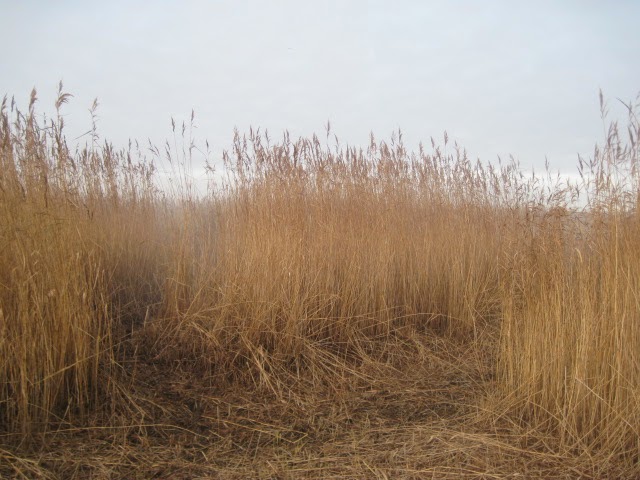
Typical view out in the reedbed when cutting the plots of reed. We cut over 5 hectares (5 football pitches) of reed over the winter to create a mosaic of different habitats across the reedbed, creating better conditions and more insects for Bearded Tits to feed and breed. After a week or so of cutting, it became a bit of a maze out in the reeds, and I managed to get lost more than once!
Out in the reedbed, following behind the Softrak as it does it's thing, cutting paths and plots in the reedbed, creating a lovely mosaic of habitats to keep the reedbed in tip top condtion.

Putting up some new lines of fencing out in the reedbed to replace some old fencing and control where the ponies can get to, ensuring that no part of the reedbed gets too munched by them! This was a long, difficult job, but actually one of my favourites!

And here they are! The beautiful boys themselves, doing a great job of munching the reed on the edges of the lagoons, creating edge habitat which is good for all the birds, mammals and beasties that live in the reeds.
The massive tidal surge on 5th December resulted in a rather muddy, sticky reserve, with rubbish, reed litter, and mud covering everything. The clean-up operation took about 3 weeks, but we managed to re-open after Christmas.
The paths and hides (see next photo) got totally covered in mud and silt, which we had to scrape off with massive snow scrapers, shovels, and stiff yard brushes. We scraped off a layer of stone and spent some time drying out and scrubbing hide floors, but we got it to a decent condition in the end!

The good thing about the tidal surge though, is that it brought a lot of water onto the reserve, filling up the lagoons and re-wetting the reedbed and the grazing marsh, helping to create good conditions for the breeding season and attracting in a lot more ducks and geese!
The mud and silt on the paths also allowed animal tracks to be seen more clearly, including those of weasels, badgers, foxes, deer and birds of all shapes and sizes
You do find some odd things washed up in the reedbed...
Things were back to normal after Christmas, and we spent some time cutting up some of the coppiced wood from last year and stacking it up for use as firewood! The driftwood that was washed up came in handy too!
We also spent some time clearing up the yard and the area around the workshop and office, in preparation for some improvements, which involved removing some trees, bushes and old fencing, and just generally tidying up the space!
As well as spending time at Blacktoft Sands, I also visited the RSPB reserve at Fairburn Ings, where I saw a lovely range of ducks, geese, woodland birds, and even a few Kingfishers! Well worth a visit.
A view of sunset over one of the lakes at Fairburn Ings.
In addition to all of the practical work, I also helped out with people engagement, including writing out information boards to go along the nature trails to the hides! Of course, the picture isn't by me - far too good to be my work!
So here is the result of the new Softrak reed cutter/bundler - giant bales of reed! The plan is to use these reed bales to create little logs of reed which can be burnt on a fire as part of the biofuels project mentioned in my earlier post.

So there you go! A brief round-up of some of the habitat and site management things that I got involved with whilst volunteering up at Blacktoft Sands over the winter. I really enjoyed my time working on this site, especially as it's so different to what I've done previously! But at the end of March I'm heading up north once again, this time to Perth (the one in Scotland, not Australisa!) to survey a wide variety of bird species across Perthshire! I won't be based at a reserve this time, I'll be moving about all over the place, surveying wherever the birds are! I'll have my own flat and I'll be given a car to use to get around, plus I'll be getting paid! Hooray! So wish me luck for the season ahead!

Sunday, 8 December 2013

A Close Call...

So you may have heard on the news about the severe flooding that hit Britain last week, with thousands of homes flooded out due to the large tidal surge, flooding towns all along the east coast. This was the largest coastal surge to hit the North Sea coastline in the past 60 years, brought about by combination of three factors all occuring at once, a lethal combination. Spring tides, the highest astronomical tides of the lunar cycle, combined with a low pressure system and very high winds across the North Sea (up to 80mph in places) to form a massive tidal surge, pushing over flood defenses and destroying flood banks in many areas. People were evacuated all along the East coast, thousands of homes were flooded, power was knocked out in many locations, lamp posts ripped up, walls torn down, and general destruction along the coast. And it was no different here!

Being located in the 'V' where the River Ouse and the River Trent meet to form the Humber, we were on flood warning quite early on, although it wasn't expected to reach Whitgift (where I'm living), although later on we were upgraded to flood warning as the tidal surge began. People living in Goole and in some villages along the Trent were evacuated, and Whitby, Hull and Boston were all badly affected by the flooding. As we weren't on flood alert until late in the day, we thought we were relatively safe, although we did move the Konik ponies to higher ground on the reserve to ensure that they would be ok as we expected the reserve would get very flooded, being right in the junction where the two rivers meet. We didn't expect it to be quite so bad as it was though... I got a phone call at about 7:45pm on Friday, when the tide was almost at its highest, to say that the the water was pouring over the floodbank, and heading towards the village, and that we probably had about 20 minutes to get everything upstairs before the waters came flooding in...

So we moved things upstairs, and got prepared to turn off the electrics and retreat upstairs at the first sign of flooding. Luckily though, the waters seemed to bypass Ousefleet and Whitgift and carried on past us! Unfortunately Reedness, the next village along, got hit very badly when part of the floodbank collapsed and the waters came rushing in, with walls destroyed and homes flooded, as the water reached up to car windows on its way through and out across the fields behind the village. So we got off very lightly really, our side of Whitgift wasn't touched at all, and the villages this side of the river weren't too badly affected. The floodwaters in Reedness have now subsided, although debris still litters the pathways and gardens.

The reserve however did get pretty badly battered, with waters reaching halfway up some of the hides, coating everything in mud and silt, pathways underwater and debris everywhere. Tomorrow the clean up begins, a task that will take quite a while by the sounds of it! Some things have been rescued from the visitor centre, but a lot of the stock was totally ruined. However, I am pleased to report that all four of the Konik ponies are ok. We got a bit worried about them when we couldn't find them on Friday night when all of the flooding happened, but as it turned out they had just jumped the fence in a bit of a panic. They got separated in pairs somehow during the flood, but they have all been relocated and moved out of the reedbed to somewhere a bit safer. They'll be checked over by the vet at some point this week as well, just to make sure they're fine. I'll post up some photos of the reserve next week, but we're hoping to be open again by next weekend. We're out of danger now though, so should be fine from here on out!

For more info and pictures (for those of you that haven't already seen them), click on the following links:
BBC News Report - General overview and explains more about tidal surges
BBC Local News - Yorkshire
Some photos - scroll to bottom of page