Showing posts with label Papa Westray. Show all posts

Tuesday, 10 September 2013

End of Season Round-up!

Well, that's it now, the breeding season is over and I'm no longer in Orkney. So how did the season go for our breeding birds? Well, in short, it wasn't great. Due to the cold weather lasting throughout May and well into June, many of the seabirds were late to start nesting, and we saw fewer pairs returning to the cliffs to nest this year; this may be because the adults weren't able to find enough food over winter and were therefore in too poor a condition to breed this year, or it could be due to other circumstances - the large wrecks of seabirds over winter may have had an effect. Whatever the reason, they didn't do so well. However, some others did do fairly well, so here's a quick species-by-species run down. I monitor the seabirds in 7 plots along the cliff face on the North Hill reserve, and the following results relate to those 7 plots.

Only 1 pair of Kittiwakes attempted to nest this year. However, this pair didn't complete their nest and laid no eggs. No fledged young were seen around the cliffs on Papa Westray at all this year, so it is likely that none fledged at all from anywhere along the cliffs. This is a species that has declined massively in the past 10 years or so due to the lack of food availability - they need Sandeels to be close to the water's surface in order to feed, but due to climate change there are fewer Sandeels at the right depth for these birds.
Kittiwakes on nests
Guillemots also did badly this year, with no chicks fledged from the 78 nesting pairs that I monitored. This was mainly due to high levels of predation of Guillemot eggs and chicks by gulls and skuas, although lack of food almost certainly played a part. Fewer birds returned to nest this year, which is always an issue for Guillemots as they adopt a 'safety in numbers approach' - cramming as many nesting birds onto the breeding ledges as possible to reduce the chances of predation. But as Guillemot numbers drop, protection from predators drops, and so the number of fledged chicks drops.
Guillemots with chicks - not a common sight on Orkney this year
Razorbills fared slightly better though, with 5 chicks fledged from 27 pairs - very similar numbers to last year, showing that their choice of nesting spot (within small cracks in the cliff face) is beneficial to prevent predation of young.
Razorbill pair with egg
Shags did well as they always do, and had the highest productivity (number of chicks fledged per pair) of all of the breeding seabirds this year! From 9 nests, 13 chicks fledged! Shags tend to do much better than other species as they eat a wider variety of prey, they can dive quite deep to catch their prey (up to 45m!) and they defend their nests quite viciously so predators ususally go for something a bit easier!
Shag on nest
The Gannets nesting on Noup Cliffs also did quite well this year, with the number of nesting birds increasing to 673, with 464 chicks fledged! Gannets are our largest seabird, and they will eat anything they can find, diving deep if necessary, so they usually do better than our other seabirds!
Gannets nesting on Noup Cliffs
Fulmars are another species that usually do well as they spit horrible smelly fishy oil at any predators that get too close to their nest, but this year and last year they have shown very poor productivity. Only 6 chicks fledged from 137 nests this year - a terrible result. We think this might be due to the Ravens that have moved to the cliffs on North Hill predating the vulnerable chicks whilst the parents are away fishing, but it could be due to poor weather conditions when the chicks are small , or due to the lack of food around Orkney and Shetland. Research has shown that some of the Fulmars nesting in Orkney will go as far as Norway to get food for their chick! A long journey indeed!
Fulmar nesting on Papa Westray
Great Skuas are one of those Marmite birds - you either love them or hate them. Personally, I love them! They're such beautiful birds with so much character! But I do understand why some people don't like them - they are a big predator of our other nesting seabirds. However, they only predate the seabirds as they can't find enough fish to feed their chicks, so they have to resort to taking the eggs and chicks of other seabirds in order to raise their chicks. It's a strategy that works! From 24 pairs, 17 chicks fledged! And as there are only about 10,000 nesting pairs globally, about 60% of which nest in Scotland, I call that a win!
Awwww! Cute Great Skua chick on North Hill
Unfortunately though, our other skua species, the Arctic Skua, did not do so well. They are one of the species predated by Great Skuas as well as gulls, and they have been declining for some time now. This year we had just 17 pairs nesting and no chicks fledged, giving the first year of zero productivity since they first started nesting here.
Unfortunately I seem to be unable to get a decent photo of an Arctic Skua, so I've taken this one from a Google search.
Arctic Terns also had a very bad year due mostly to the poor weather at the start of the season. They didn't start nesting until early June this year, and only 2 colonies laid eggs. Most of these nests only had 1 egg however, a sign that the adults were in very poor breeding condition (most likely due to a lack of food over winter and before breeding), as they didn't have the energy to produce more than one egg - they usually lay 2 or 3. They are also predated by both Arctic Skuas and Great Skuas, and probably by the gulls as well. They didn't manage to fledge any chicks this year, the fourth year in a row with no fledged Arctic Tern chicks.
A beautiful Arctic Tern
It's not all doom and gloom though! Black Guillemots showed an increase in pre-breeding numbers, and with further study we will be able to relate this to the actual number of breeding pairs. The population of nesting Dunlin also increased to their highest number in the past 10 years, and the small colony of Sandwich Terns on Papa Westray (the only colony in Orkney as far as I'm aware) raised between 16-18 chicks from 20 pairs! Twite also did very well, with most pairs seen with chicks later on in the season. The pair of Golden Plovers did well too and managed to raise 3 healthy chicks, so it looks like the cold, wet season was good news for our breeding waders!


'So what now?' I hear you ask, 'You're finished in Orkney, where are you jetting off to next!?' Well, at the moment I'm back at home while I sort things out, buy some new equipment, catch up with family and friends, and apply for jobs! But hopefully at the end of September I'll be going up to Yorkshire to stay at Blacktoft Sands RSPB reserve as a Residential Volunteer! I'm going up there this Friday to check it all out and see what the reserve is like. I know they have a few other people that they're talking to but hopefully I'll get the placement! It's not paid, but I get free accommodation on the reserve, my travel will be paid for, and I'll get loads of useful experience which will help me to get a paid job next winter! So wish me luck!

P.S. - A massive CONGRATULATIONS to my best friend Connie who got married last weekend! You look amazing in that dress, I'm so happy for you both! :D

Monday, 12 August 2013

Time-lapse Papay

Ever wondered what Papa Westray looks like on a regular week? Well, during the Great Auk AAKnowledge weekend, we had Site Eye Time-Lapse films come up to Papay to show us their 3D film of the Papay Great Auk and to shoot some new footage for a short film they are going to show at the Orkney Science Festival in September. They set up time-lapse cameras at several points across the island and filmed at various points throughout the week and during the Great Auk festival. They have now begun work on producing the film, but they've published a short clip on their website, so take a look!

Just click here to go to the site!

Thanks to Brian McClave and co for making this film!

Wednesday, 7 August 2013

My social life on a small island in the North Sea

So the question I get asked the most while I'm out here is 'What do you do in the evenings?' and I often get comments like 'You must be so bored/lonely/depressed living out here totally on your own. I mean your completely ALONE aren't you. So lonely and alone'. And I'm like, 'Well, thanks for your encouraging comments there, but actually I have a relatively busy social life up here!' There's the coffee morning each Wednesday, where I catch up with the islanders, meet some of the visiting tourists and recruit people for my guided walks, all whilst consuming copious amounts of cake and coffee! There are cinema nights some Friday nights (more often outside of the busy period), and the pub on Saturday nights, usually with live music! I've probably mentioned all of these activities before, but as well as these social activities, there are also the big events each year. In my last post I spoke about the Great Auk weekend and the Orkney Nature Festival stuff, but there's also the Papay Fun Weekend - the highlight of the social calendar! 


Every year in July, the whole island celebrates how awesome island life can be with a big party! There's loads of activities going on all weekend, from craft afternoons to races to eating, drinking and dancing! And of course, it's part of my job to help out with community activities like this, so my usual Saturday tour was cancelled and off I went to help out with Fun Weekend activities!It's definitely a busy weekend for everyone involved, and I got pretty involved with it all this year! It was a good weekend, with amazing weather, made all the better because a few of the RSPB staff from Mainland and a couple of other islands came up to enjoy the weekend too!

Friday - I made dragonflies at the craft weekend, which turned out to be a pretty popular event! Then it was dinner and a dance in the evening.
Some happy customers making draongflies!
The finished result! Pretty good for some pipe cleaners and beads!
There was also T-shirt printing at the craft afternoon! Mine's the one with the Black Guillemot - I ended up doing quite a few for people!
Saturday - Saturday is sports day! There are all kinds of races, from tattie and spoon to sack races, with a football match and tug-of-war afterwards, plus lots of food and cake to be had all day! I didn't really experience much of the races though, as I was painting faces all day! Plus another dance with more food in the evening!
I volunteered to make sandwiches for Saturday lunch, so me and Lorna spent all morning making 2 loaves of egg sandwiches!
Some of my face painting work


Catching some rays out of the wind!
'HEAVE! HEAVE!'
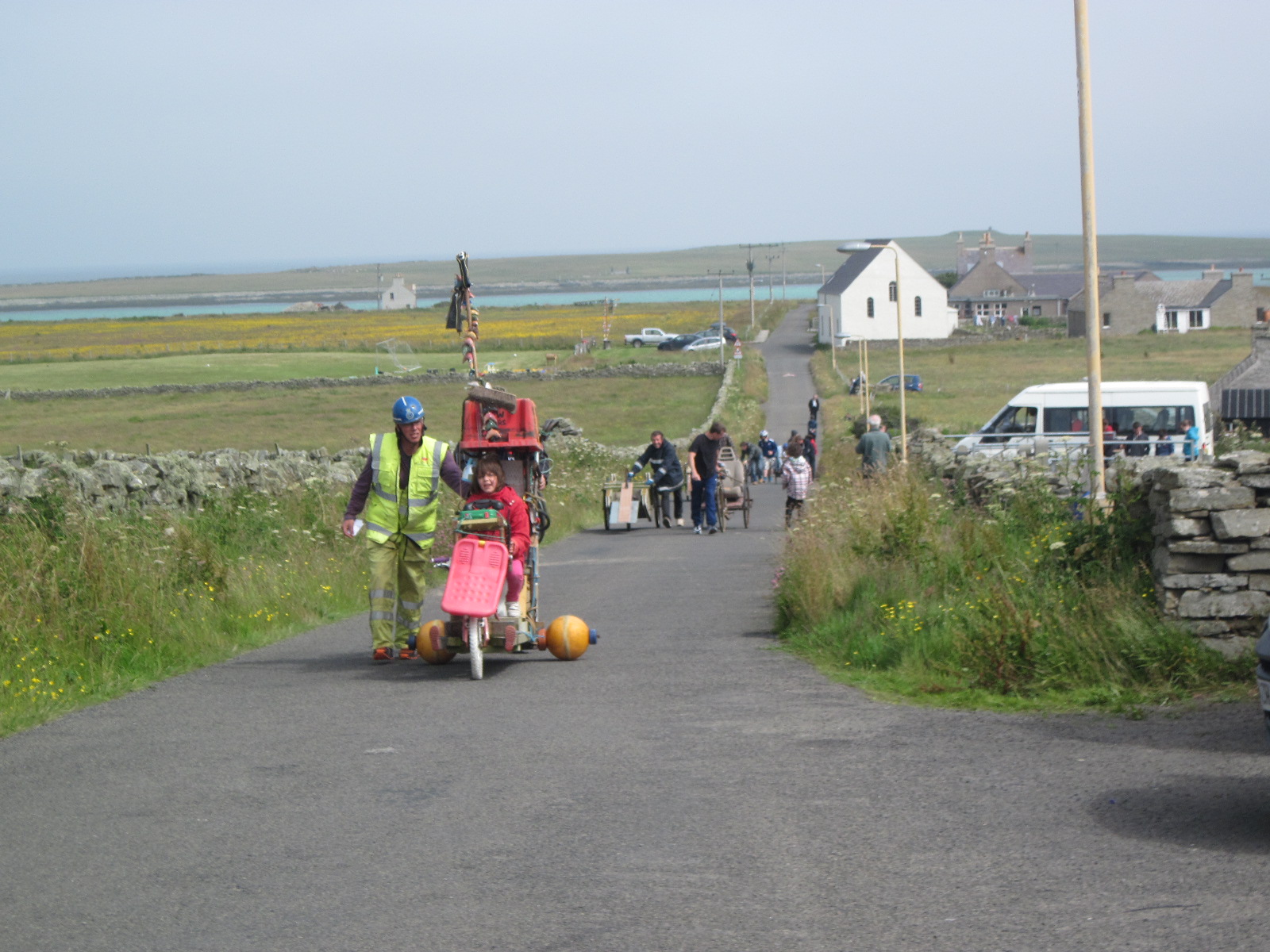
Sunday - More food, more fun! Home-made carty races 'doon the brae', pipe bands, sandcastle competitions and a concert in the evening!
The carty's! Only 3 rules, they must have: brakes, steering and a helmet!
Carty's coming back up the hill after the time trials - now for the one-on-one races!
Some of the visiting RSPB staff were used as judges and got to present prizes for the best looking carty's!
One of the RSPB's contributions to the sand castle competition - a dragon!
Mine and Amy's contribution, and the winner! A Walrus in honour of the one that visited North Ronaldsay over winter
All accompanied by the pipe band of course! A really great weekend!
The weekend after this it's the Westray Regatta! A sailing race between Westray and Papay! Last year I went along with a little RSPB stall at the pier, but this year we decided to skip it out, so I did my regular tour duties instead. But that's not all! On top of this, it's the County Show this coming weekend, so I'll be off to Kirkwall to help out in the big RSPB tent there, selling tombola tickets and encouraging people to roll up, roll up and play our games! In between eating lots of Orkney Ice Cream of course!

In addition to all of this, I do lots of little social things week to week. I go to dinner with the islanders, I go to people's houses for other little social gatherings and things, I go in to Kirkwall for events and to go on nights out, and to catch up with staff and go bird ringing! 
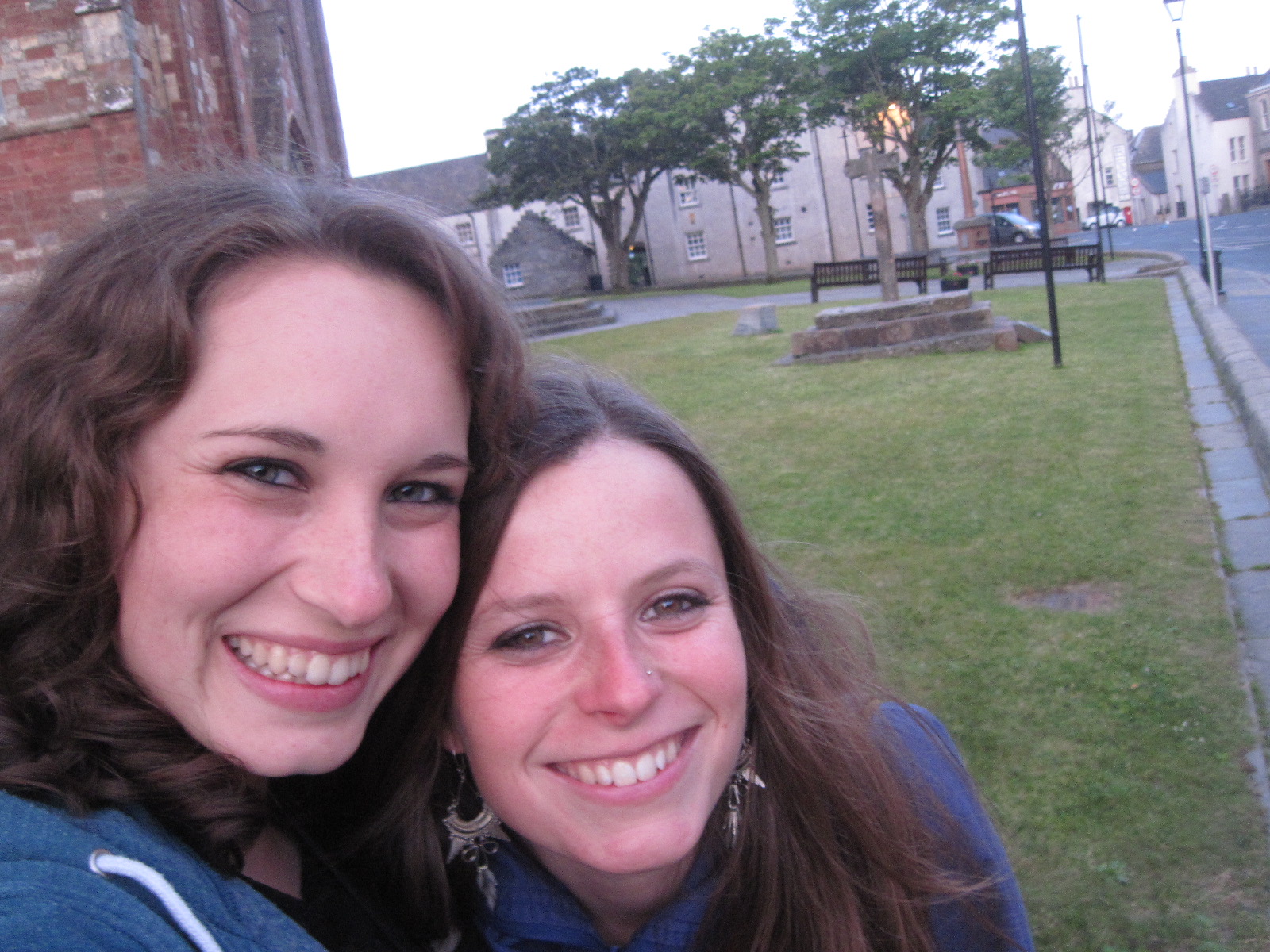
My visit to the club in Kirkwall...the only club. It wasn't amazing, but not too bad.

Walking home at 4am. Yes, it really is that light at 4am here!
Socialising with the Captain and ferry staff in the wheelhouse on my way to Kirkwall
Terrible photo of a Storm Petrel (left) and Leach's Storm Petrel that we recently caught. They only come close to land at night and have great night vision which I didn't want to ruin by using the flash! This is my first ever Leach's Petrel!
And when I'm not out doing social things in the evenings, I'm ususally doing surveys, writing up reports, sorting out plans for the coming week, painting the house, fixing up the inside of the house, doing general housework, or just relaxing! Watching films, reading books etc., there's always something for me to do, so I'm rarely bored here!

P.S. - Thinking of you Nana, hope you get well soon. Love you xxx

Saturday, 15 June 2013

Surveys, seabirds and sunshine!

June is the busiest month in any conservation job. The breeding season in in full swing, with birds either sitting on eggs or looking after their newly hatched chicks, visitors are everywhere, and there are about a million surveys to do. But it's even busier on seabird sites, as June is when counts, surveys and monitoring of the breeding seabirds begins! I've been kept incredibly busy since I first arrived back here in April, but since the start of June I've been twice as busy as before! I'm doing seabird counts and monitoring two or three times a week, which involves sitting and watching the birds or an hour or two at each of my seven monitoring sites, and waiting for them to move slightly so that I can see whether they have eggs or chicks - it sounds tedious, and it can be if the birds aren't cooperating, but most of the time I enjoy it! Especially if the weather's nice! 
Nesting season also means attacking season for some of our seabirds! This is a Great Skua, and he's very annoyed at me for being in his territory! Photo taken just before he hit me in the head with his feet!
I've also been continuing with my surveys of all of the other birds that nest on the North Hill reserve (on Papa Westray), doing my guided tours twice a week, and of course doing paperwork and going to team meetings! June is also THE time to count seabird colonies, and that is exactly what me and the RSPB team spent last Saturday doing! Read more about this on our RSPB Orkney Blog. So, I've definitely been kept busy so far this month, and I'm sure there will be many more things for me to as the month continues!

It's not all work, work, work though, and I have found the time to go to many of the social events here on the island! I go to the cinema nights and pub nights whenever I can, and I really enjoy the Coffee Morning on Wednesdays - some of the best cake I've ever had, not to mention the cheese scones! And I was even asked to bake for the coffee mornings a few times now - a high honour indeed!
I made Chocolate Cherry Cheesecake Brownies. They seemed to go down well, what do you think?
I've even had a visitor come to stay, which I feel would have been more interesting if I hadn't been working the whole time, but despite that, it's still a wonderful place to come and visit! But the main social event of the year so far has to be the AAKnowledge weekend, commemorating the last pair of Great Auks in Britain, which bred on Papay. The male of the pair was killed in May 1813, the female was killed the year before, so this was the 200th anniversary of it's death which we commemorated. It was a lovely weekend, with dances, dinners, a farmer's marknet, a walk up to the Great Auk statue, and talks by a variety of people, including a very informative talk by Dr Jo Cooper, who looks after the Papay Great Auk at the Natural History Museum in Tring. We even had a 3D representation of the Papay Auk, as unfortunately it is too fragile to make the journey all the way up here. A wonderful weekend, which hopefully helped to spread the story of the Great Auk and it's extinction, and to point out the many similarities between it's extinction and the current decline that we are seeing in our seabirds up here and elsewhere across the UK and Europe. The weekend was made even nicer as a few people from the office came up to stay and join in the festivities! 

The AAKnowledge Poster
Commemorative tea-towel - everyone on the island drew an Auk! Can you find mine? HINT: I did a Black Guillemot
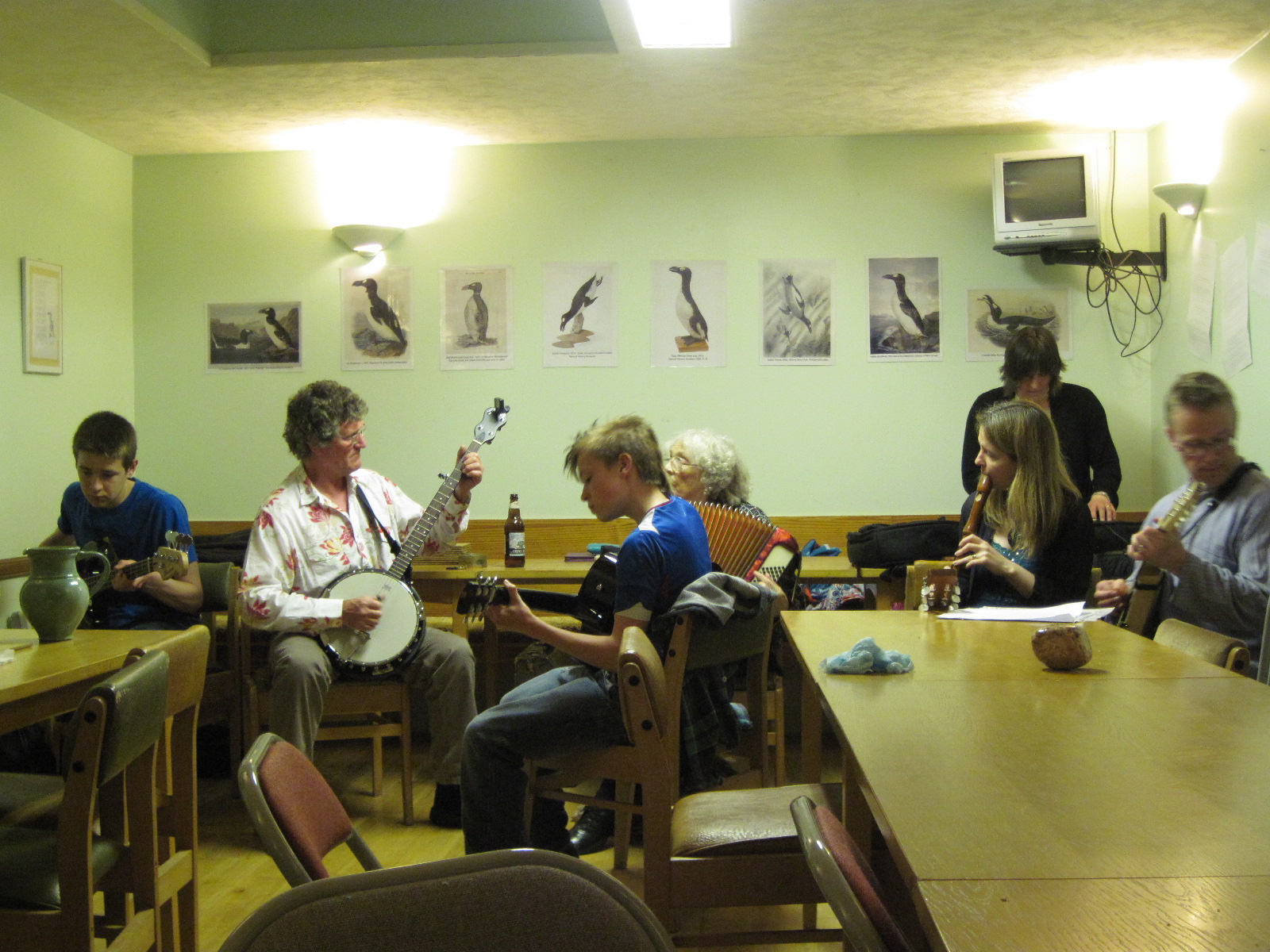
The Papay Band playing on the Sunday night after the talks and a mighty feast!
The 3D Auk. This is the actual one that was killed on Papa Westray in 1813 and is the only surviving British specimen. It looks better when you actually see it in 3D!
Even the beer was Auk themed!
The AAKnowledge weekend was part of the larger Orkney Nature Festival, ran by the RSPB with support from various other organisations to get people more interested in Orkney nature and wildlife, and to get people out to look at that wildlife! The festival lasted just over a week and included a wide variety of events both on Mainland Orkney and on several of the islands. Unfortunately I didn't get to attend very many of the events as I had walks and surveys to do, but I did manage to get to the events on Westray up at our Noup Cliffs reserve, and was lucky enough to go on the boat trip around the cliffs - a lovely and unique way to experience this seabird city! I also went to a few events on Mainland, including a guided walk and market!
Approaching Noup Cliffs on the boat trip for the Orkney Nature Festival

75m high and covered in seabirds!
Me on the boat trip round the cliffs! (Won't let me make it the right way up...)
Anne's amazing mural on the wall of the office for the Orkney Nature Festival's marine day
In bird news, the season has been off to a very slow start, with the cold weather continuing well into May. We saw many late migrants coming through, and noticed that most birds were quite late in nesting and egg-laying, a trend which is evident all across the UK. However, things are starting to look up, as all species are now either on eggs or with young chicks. The species that seems to have been worst affected by the extended cold spell seems to be the Arctic Terns. Many passed through in late May as the weather got a bit warmer, but our breeding birds didn't return until early June and are only now starting to lay. Their numbers are much lower than last year, across both Westray and Papay, but I'm hoping it's just going to be a late season for them. Another species that seems to have been greatly effected is the Corncrake. Orkney is one of the few places in Britain that Corncrakes still breed, but this year we seem to have a lot fewer birds. Last year there were 12 males on Westray and 1 on Papay, but this year it looks like there's just 5 on Westray, and none at all on Papay. It's likely that the cold weather put them off of their migration, and that they just stayed in Europe to breed rather than making the extra journey over here. It will be very interesting to see how both of the species do over the season, but I'm hoping that things get better for them soon! The weather has significantly improved now, with many warm, sunny days, low winds, and general niceness, and long may it last!
An amazing sunset after an evening spent surveying Curlews across the island

Sunday, 21 April 2013

Winter 2012 / Early 2013

Hello everyone, sorry that I haven't posted anything in a while, I was having issues logging in! Anyway, that's all sorted now, so I can give you all a very brief catch-up of what I've been up to over the winter and what I'm doing currently. I've noticed that my blog post about Poland seems to have disappeared which is quite annoying, but I'll re-write that one later.

So as you may know, after leaving Orkney in August last year I went on a weeks trip to Poland, which was simply amazing! After my lovely week in Poland, I went back to stay with my mum and sister in Hertfordshire as I didn't manage to find any paid conservation work over the winter, although I did manage to do quite a lot of volunteering! I volunteered with my local conservation charity, the Box Moor Trust and did lots of practical volunteering like clearing out ponds, cutting down trees, and generally keeping their areas of land looking nice and ensuring that the habitat is good for the birds! They're a lovely group, the work is pretty fun (when it's sunny anyway) and it's a really good workout! I definitely enjoyed volunteering with them and will be returning to help them out again next year!
Clearing out a pond with the Box Moor Trust
I also volunteered at RSPB Headquarters at Sandy, Bedfordshire, answering emails and letters about the Big Garden Birdwatch survey that they run each year. This survey takes place at the end of January each year and simply involves counting all of the birds in your garden for an hour. Over half a million people got involved in the survey, which provides the RSPB with a lot of data and helps them to spot trends, such as the decline in House Sparrows and Starlings which we have been seeing in recent years. It's a lovely way to spend an hour, so get involved next year! In addition to this, I also spent some time volunteering at Verulamium Park in St Albans, showing people the Herons that breed on the island in the middle of the lake there. Unfortunately I didn't manage to see any chicks as I had to leave to go back to my summer job, but I'm told that they had quite a few chicks, despite the cold weather!

So despite not finding a full-time job over the winter, I did still manage to do some volunteering and had a lot of fun! I even managed to go to Birmingham for a weekend of bird ringing with my trainer. We caught a wide variety of species over the weekend, the nicest of which was seven Great-spotted Woodpeckers!! An amazing catch! I do have some photos of the ringing activities, but they're all on my phone...I'll add them in once I get the cable! (I managed to email a couple of photos to myself from my phone)
A Willow Tit, quite rare in Britain now.

One of the 7 Great-spotted Woodpeckers that we caught. This one's a boy, as it has red on the back of it's head.
Shortly after leaving Orkney, I decided that I definitely wanted to return to the job and the island in 2013 for a second season, so I didn't really spend much time over winter looking at advertised cosnervation jobs! Early this year, I accepted the post as Orkney North Isles Warden. I bought some new gear (including some rather expensive new walking boots) and then made the move back up to the islands in late March! I decided this time to do the journey as cheaply as possible, which turned out to be an overnight coach from London to Aberdeen, and then the ferry from Aberdeen to Kirkwall (Orkney). I won't lie, the journey was pretty rough and I was knackered by the time I got to Orkney (at 11pm) but it was cheap! Only £33!! I stayed over in Kirkwall that first night, then got the ferry over to Papa Westray, as I had a lot of luggage and would have had to pay extra if I'd taken it on the little plane! Over the winter, Amy (the Corncrake Officer last year and again this year) stayed in Rose Cottage, my little house on Papa Westray, so it was lovely and clean and warm when I arrived - bonus!!
Back at Rose Cottage!
I've only been here a few weeks so far, but I'm really enjoying being back! It really is a wonderful place to spend the summer, and although it hasn't been the best weather (pretty windy) it's much nicer than it was 'doon sooth'! The community seems to have welcomed me back with open arms, so it actually feels quite like I never left, which can't be a bad thing! Since I've been back I've mostly been sorting stuff out for the up coming season, getting everything organised, and doing lots of Black Guillemot surveys! Black Guillemots are one of my favourite birds. They are auks, which means that they are related to Puffins, Razorbills and Guillemots, three species that also nest up on the reserve here. But I think the Black Guillemots (known up here as Tysties) are my favourites of the group, although Razorbills are a close second! Tysties are just so beautifully coloured though. Pure black all over, apart from a little white blob on each wing, with bright red feet! They are best seen in the early mornings and late evenings when they can be seen in large groups on the sea around their breeding grounds, whent hey can be heard making a wonderful whistling noise - much better than the strange growly noises that Puffins make!
Black Guillemots down by the pier on Papa Westray


Black Guillemots nest in 'burrows', by which I mean gaps between large boulders, under rocks, in caves, and generally anywhere rocky and inaccessable, which is probably why they are doing quite well in comparison to other seabirds that nest on the open cliffs. It does make monitoring them much harder though, as they usually nest in places that people can't reach! So this year, I have made some 'Tystie Cairns' - piles of rocks with a little entrance hole and some sand/gravel in the middle so that the egg/chick will be comfortable. It also means that monitoring them might be a bit easier! Let's hope that they choose to use at least some of them!
One of the Tystie Cairns. You can just about see the entrance, down and to the right of the number 1
I think that's about all for now, I'll try to update this blog much more regularly now that I can actually access it again, and will keep you all updated on Orkney life!

Tuesday, 7 August 2012

My Orkney Summer


Apologies for not posting anything for the past few months, I’ve been unbeliveably busy with work over the summer! I’ll try and cover everything that’s been happening up here without rambling on for too long…

So work wise, I’ve been very busy indeed! Over the past few months I’ve been surveying all of the wildlife that can be found on the reserve, with a focus on the seabirds. Twice a week I have been monitoring the Guillemots, Razorbills, Shags and Kittiwakes nesting on the cliff faces along the area of the reserve known as Fowl Craig, as well as going over to Westray at least once a week to monitor the seabirds nesting on the RSPB’s Noup Cliffs reserve. However, there are too many seabirds at each of these reserves for me to monitor them all, so thankfully I only have to do a selection of sites. This monitoring involves regularly visiting each site and recording what every nesting pair of birds is doing – whether they have eggs, chicks or nothing at all. Each site may have a few hundred birds, so it can take some time! The point of this monitoring is to see how many chicks each species manages to rear to fledging (flying), as the chicks are much less vulnerable to predation when they can fly away from the nest, so it gives us an idea of how well the breeding season has gone, and since these species will return to the same nest each year to breed, we can follow each pair throughout their lifetime and track any changes in breeding success. This monitoring is important as seabirds are at the top of the foodchain and they exclusively eat fish and other marine life such as squid, so by following the fate of these seabirds, we can see how healthy our marine environment is - the more seabirds there are, the healthier our seas must be, as they can support a larger number of predators.
Me surveying the seabirds at Noup Cliffs on Westray
However, over the past decade, our seabirds have been rapidly declining, especially in the northern isles (Orkney and Shetland). A lot of research has been carried out to find out why our seabirds are declining, and climate change has been found to be the answer. Climate change is causing our seas to heat up and is pushing Sandeels (the preferred fish of seabirds) further away and into deeper waters, making them harder to get at. Due to this lack of food, the majority of our seabirds have been showing a rapid decline in numbers, as they are unable to find enough food to feed their chicks. Last year none of the Guillemots and Razorbills nesting on the cliffs on Papa Westray managed to fledge chicks, but this year we are seeing a different picture. My monitoring has revealed that we have had at least 26 Guillemot chicks and 5 Razorbill chicks fledge, an amazing result! Let’s hope they can keep it up for a few more years!
Puffins!!
In addition to my seabird monitoring, I have also been carrying out Corncrake surveys. Corncrakes are small, unassuming birds related to Moorhens, although they don’t really spend any time in the water. But there is more to them than meets the eye! Every year they migrate from Africa to breed in Europe, Orkney and the Western Isles. And as soon as they arrive here, the males start calling. Their distinctive ‘crex-crex’ call can be heard all night, every night, coming from areas of suitable habitat such as iris beds, nettles and silage fields. This makes Orkney the perfect destination for these birds, as the main crop here is silage (which is used to feed livestock over the winter, the main export being beef). Their calls are incredibly loud and the males will call all night without stopping so that they can attract in as many females as possible. So naturally, the best time to survey them is at night! So, between midnight and 3am I carried out surveys for these birds, visiting every area of suitable habitat. Luckily, this only needs to be done twice at each location, so I did two surveys across Papa Westray (unfortunately we only have 1 Corncrake this year), and one on Westray, which has the most Corncrakes in Orkney this year, a massive 12 calling males!

In addition to these surveys, I have also been following the fates of the Arctic Skuas, Great Skuas, Fulmars, Gannets, Arctic Terns, Sandwich Terns and the various wader species that have been nesting on the two reserves. I have also been doing guided walks around the North Hill reserve twice a week, showing visitors all of the wildlife on the reserve, from Puffins to Primroses and shipwrecks to seals. Currently I am busy counting the Scottish Primroses that grow on the North Hill reserve on Papa Westray. There are about 50 colonies across the reserve, each holding anything from 1 to 8000 Scottish Primroses. I managed to get a group of volunteers and staff to come down for a visit to count the largest colony of 8,134 plants and I am slowly getting through the rest of them, although it takes a long time, crawling along on hands and knees to look for these tiny but beautiful plants!
A Scottish Primrose (Primula scotica)
A very cute Arctic Skua chick!
Please click on the following links to read my posts on the Orkney RSPB blog:


Despite carrying out such a variety of work, I am still able to have something closely resembling a social life! I get to the coffee morning as often as I can so that I can catch up with some of the locals that I wouldn’t see very often otherwise, and I go to the film nights and Saturday pub nights as often as I can to socialise with the islanders and any visitors that are staying on the island. I also get down to Kirkwall to see the other RSPB staff and have a look around the shops a couple of times a month. I had a visit from my dad in mid-June, and he seemed to enjoy his trip to my little island quite a lot! We visited all of the historical sites and he came on one of my guided tours across the reserve, but seemed to be nervous of how close I was getting to the edge of the cliffs! But at least he got to see lots of seals and seabirds, and got a short introduction to the island in general. Hopefully his visit has made him want to visit Orkney again – it really is a beautifal part of Scotland.
In action - the bike basket that my dad sent me!

My awesome Papa Westray socks! Thanks dad!
In mid-July we had the 7th annual Papay Fun Weekend! This is basically an entire weekend of fun and frolics, including BBQs, arts and crafts, tattie and spoon races, obstacle courses, tug-of-war, tea and cakes, carty races ‘doon the brae’, Scottish pipe bands, and two ceilidh dances! I was in charge of face painting and hook-a-duck for the weekend, both of which proved to be very popular, and I now know several of the Papay versions of the traditional Highland dances! I managed to get to the Westray Regatta, a sailing race between yachts of various sizes from Westray to Papay and back again on the last weekend in July. I went over and set up an RSPB stall, sat out in the sunshine, talked to passer’s by, and got to watch the boats sailing around! I also saw another pipe band playing, and ate some more cake…I really should stop eating so much cake! I’ve even manged to squeeze in a bit of bird ringing in my spare time, but unfortunately I’ve not managed to get to any of the other islands yet. However, I am planning a trip to North Ronaldsay at the beginning of September after my contract here ends, so I’ll let you know how it goes! Next weekend is the County Show down in Kirkwall, which should be entertaining!

The carty that won the prize for being the best looking!
Me ringing a Hen Harrier chick!
It really is a very beautiful island and such a lovely place to live, I’m so glad I’ve had the opportunity to spend such a long time here! I’m hoping to come back again next year, but it hasn’t been decided yet – watch this space!